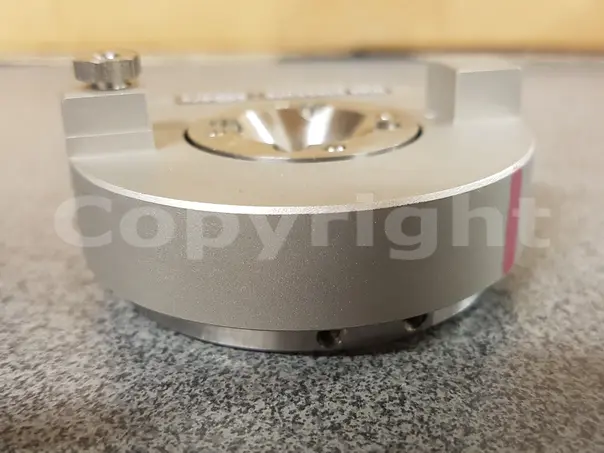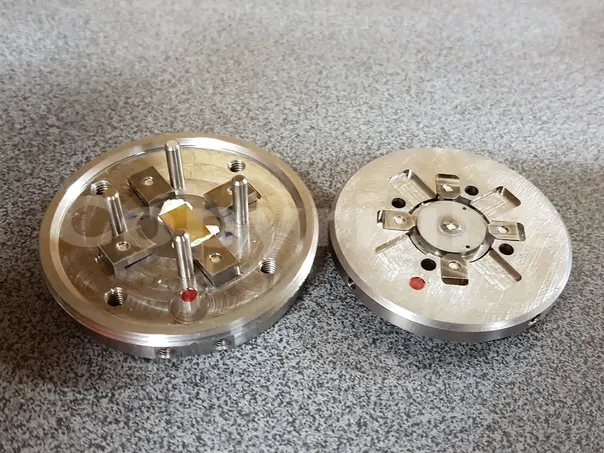
Membrane Diamond Anvil Cell
M-DAC-XCV-PROXIMA
Technical data
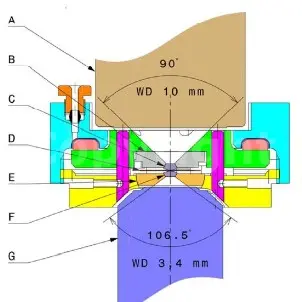
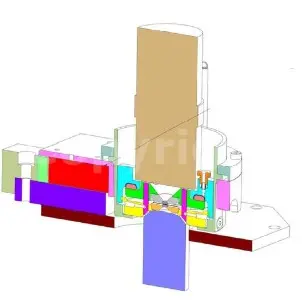
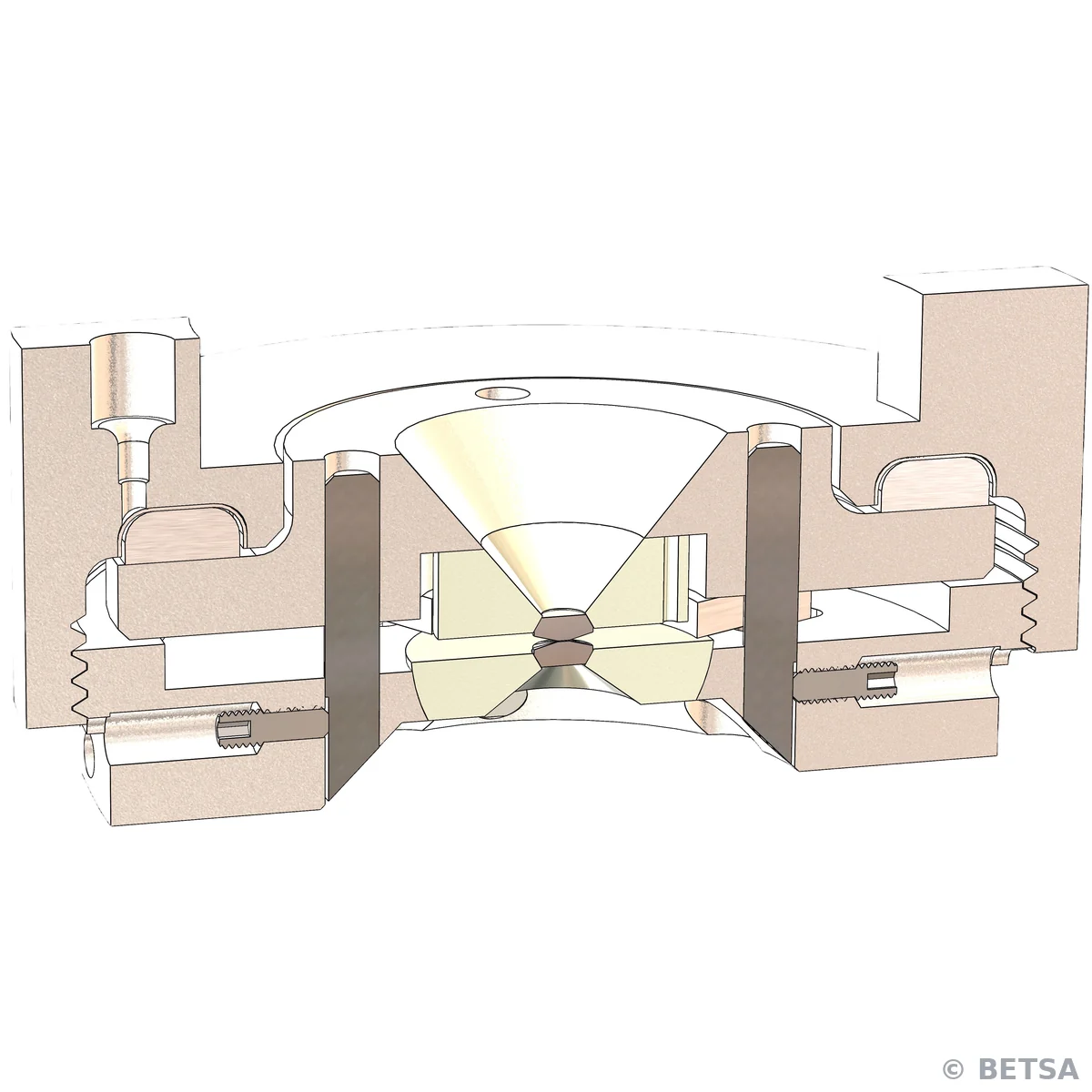
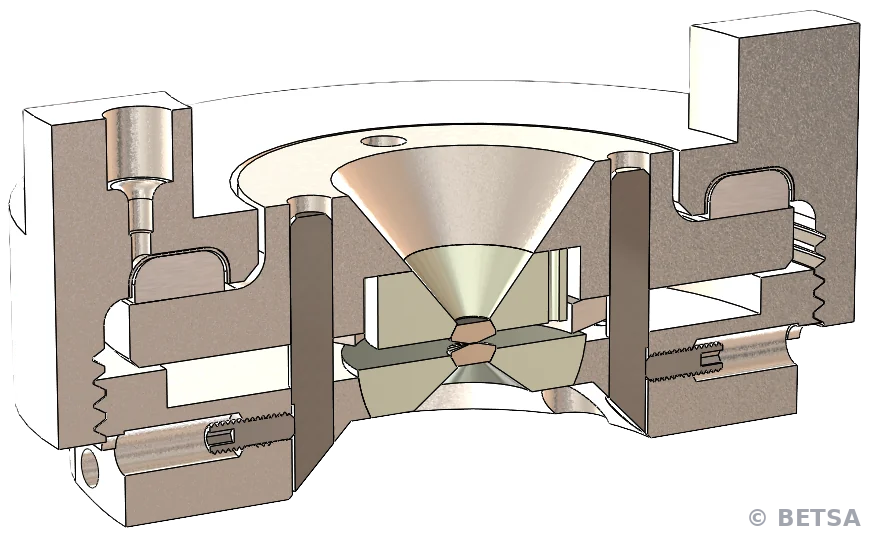
Ultra-flat membrane diamond anvil cell developed for SMS high-pressure experiments. Its short working distance allows the use of high-numerical-aperture lenses and collects as much signal as possible — ideal for very small samples (even individual nano-objects, as in the article) or weakly emitting samples.
A collaboration between BETSA® and the UCBL A NEW “NANO” Membrane Diamond Anvil Cell is available, to achieve a new objective, a minimal working distance, a lightness and a maximized angular opening. This NANO M-DAC was developed by the UCBL and is now available through a partnership with BETSA®.
Performance
Optical access
Optics
Dimensions
Composition
Materials
Drive and clamping
Other features — Holes can be drilled for access next to the sample to:
- set up thermocouples
- set up electrical connectors (electrical measurements)
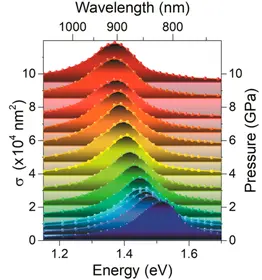
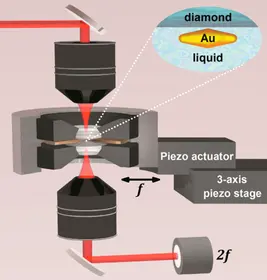
When reducing the size of a material from bulk down to nanoscale, the enhanced surface-to-volume ratio and the presence of interfaces make the properties of nano-objects very sensitive not only to confinement effects but also to their local environment. In the optical domain, the latter dependence can be exploited to tune the plasmonic response of metal nanoparticles by controlling their surroundings, notably applying high-pressures. To date, only a few optical absorption experiments have demonstrated this feasibility, on ensembles of metal nanoparticles in a diamond anvil cell. Here, we report a nontrivial combination between a spatial modulation spectroscopy microscope and an ultraflat diamond anvil cell, allowing us to quantitatively investigate the high-pressure optical extinction spectrum of an individual nano-object. A large tuning of the surface plasmon resonance of a gold nanobipyramid is experimentally demonstrated up to 10 GPa, in quantitative agreement with finite-element simulations and an analytical model disentangling the impact of metal and local environment dielectric modifications. High-pressure optical characterizations of single nanoparticles allow for the accurate investigation and modeling of size, strain, and environment effects on physical properties of nano-objects and also enable fine-tuned applications in nanocomposites, nanoelectromechanical systems, or nanosensing devices.